Aditya Adiga
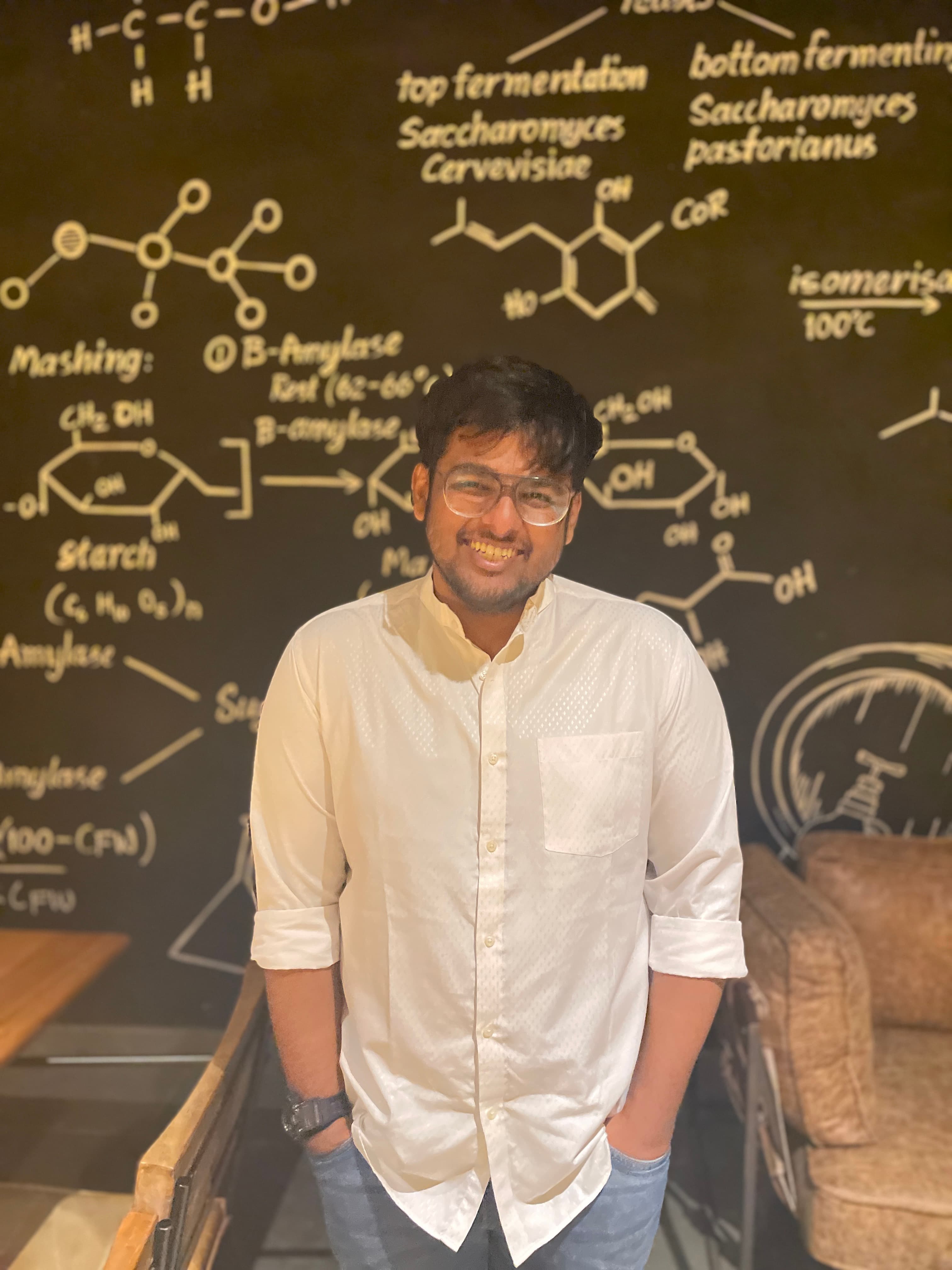
I’m an AI alignment researcher working on the live theory research agenda at groundless AI, with a focus on how AI systems interact with human reasoning, coordination, and risk across contexts.
My work spans two primary directions: human-centered AI interfaces for collective sensemaking and epistemics, and the study of context- and substrate-flexible risks in AI systems. Across both, I’m interested in how AI capabilities can be shaped to support robust human discernment rather than replace or distort it.
I also have a technical background in computer vision, computational pathology, and medical imaging, grounding this research in applied AI development.
Please reach out to adityaadiga6@gmail.com to have a chat or to collaborate.
Publications
- Aditya Adiga. Live Conversational Threads: Not an AI Notetaker. LessWrong, 2025.
Contribution: Designed and developed Live Conversational Threads and wrote a blog presenting my perspective on live theory and how this application supports it. - Matt Farr, Aditya Arpitha Prasad, Chris Pang, Aditya Adiga, Jayson Amati, and Sahil K. MoSSAIC: AI safety after mechanism. In Submitted to ILIAD 2: ODYSSEY, 2025. Accepted.
Contribution: Developed and presented an interface to support the ideas in the paper. - Bindiya A. R., Aditya Adiga, B. S. Mahanand, and DIRECT Consortium. 3D convolutional neural network model for detection of major depressive disorder from grey matter images. Applied Sciences, 15(19), 2025.
Contribution: Worked on system design, implementation, analysis and manuscript writing. - Aditya Adiga, J Chandra Darshan, and K K Umesh. Smart greenhouse management system using IoT and multivariate fuzzy logic. In Lecture Notes in Networks and Systems, Springer Nature Singapore, 2024.
Contribution: Responsible for the entire project lifecycle, including conceptualisation, system design, implementation, and manuscript writing.
Experience
Groundless AI / AI Safety Camp
Jan 2025 -- PresentIndependent
Oct 2024 -- PresentIndx.AI
Jan 2023 -- Aug 2024Projects
MOSSAIC explores how AI risks and failure modes change across computational substrates, architectures, and deployment contexts. The work focuses on why safety interventions that succeed in one setting often fail when we try to transfer it directly to another. We are working towards building frameworks that capitalise on AI capabilities to generate substrate-sensitive mitigation strategies, proposing a family of safety interventions rather than a uniform solution. This work contributes conceptual and theoretical grounding for substrate flexibility as a core problem in AI safety research.
This project investigates interfaces for AI systems can support collective sensemaking to facilitate genuine human interaction and discernment. I designed an epistemic interface that backgrounds AI while preserving context, structure, and interpretive agency. Conversations are represented as directed acyclic graphs to maintain thematic relationships and enable non-disruptive navigation. The system supports bookmarking and marking potential insights, which can later be used to generate AI-assisted formalisms tailored to specific research interests. Alongside the technical work, I also made philosophical contributions to ideas around AI interfaces that enable meaningful human participation in increasingly AI-integrated environments, with relevance to AI safety and collaborative research.
This project explores MRI-based classification of Major Depressive Disorder using three-dimensional convolutional neural networks. I designed and iteratively refined model architectures and built training and inference pipelines to support systematic experimentation. I applied Grad-CAM–based visualisation techniques to analyse model activations and identify salient brain regions. The work emphasises understanding model behaviour alongside predictive performance.
Designed an OCR-based pipeline for extracting structured information from scanned invoices, using image registration, template matching, and preprocessing to support robust performance across real-world document formats.
I worked on semantic segmentation of complex tumour microenvironments in whole-slide histopathology images. Using a UNET++-based architecture, I developed models to identify tumours, stroma, and surrounding tissue under conditions of high biological variability. Collaborated closely with a pathologist to annotate underrepresented regions and iteratively refine model performance. The resulting system achieved approximately 80% intersection-over-union while remaining robust to heterogeneous tissue structure.
Building on earlier segmentation work, this project focuses on identifying tumour-infiltrating lymphocytes within inflamed stroma regions. I fine-tuned Detectron2-based instance segmentation models and integrated them with upstream tumour microenvironment predictions. Model outputs were validated with domain experts to ensure relevance for downstream immunotherapy analysis.
This project investigates regression-based biomarker scoring using multiple instance learning. I built feature extraction pipelines based on histopathology foundation models and experimented with several MIL strategies. Model outputs were evaluated not only for predictive accuracy but also for biological plausibility and clinical applicability.
I developed a parallelised pipeline for large-scale whole-slide image processing using VIPS. The system stitches approximately eight million image tiles into pyramidal TIFF images and overlays heatmaps to support interpretation of model outputs. End-to-end processing time was reduced from several hours to under ten minutes, significantly improving scalability.
This project focused on integrating AI inference pipelines with an in-house pathology image viewer. I designed workflows informed by user interviews to align model outputs with clinical interpretability requirements. API-level integration linked image storage, predictions, and visualisation layers, improving usability and enabling smoother diagnostic and research workflows.